Are Henna Stencils Worth It? Stencils vs Freehand
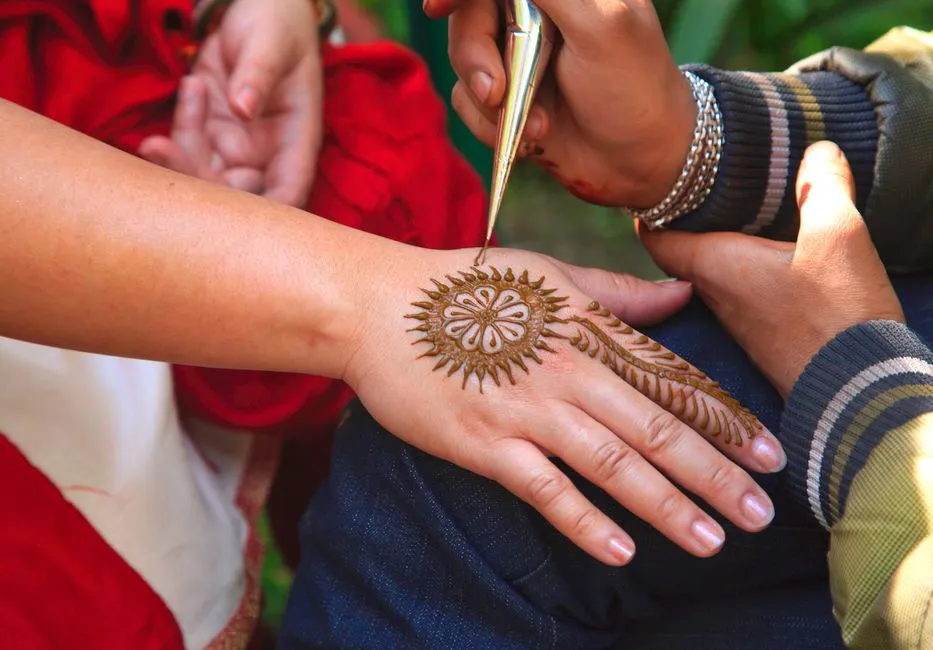
- Are henna stencils worth it for beginners?
- Which method fits your goal?
- When is an adhesive stencil useful?
- What makes a transfer guide different?
- What should you check about size and curved placement?
- Can freehand practice offer more lasting value?
- What information should a stencil purchase include?
- What safety checks apply whichever tool you choose?
- Sources
Are henna stencils worth it for beginners?
Henna stencils are worth considering for a fixed design; freehand practice suits learning to create and adapt your own lines. Start on a suitable non-skin practice surface. Never use black henna, suspected p-phenylenediamine (PPD) or unidentified paste: PPD can cause serious allergic reactions. In the United States, FDA approves henna only as hair dye, not direct skin application. Stop use and seek medical advice for reactions; breathing difficulty or sudden throat swelling requires emergency help.
Our choice is a small, clearly documented stencil for a specific pattern, or freehand exercises if developing drawing skill is the goal. This comparison is desk-researched from makers' descriptions and health guidance; we have not tested these products. Tool examples below explain formats, not certify their contents or suitability for skin.
Which method fits your goal?
| Method | What it provides | Best reason to choose it | Main limitation |
|---|---|---|---|
| Cut-out adhesive stencil | Open spaces defining a preset design | You want that particular arrangement | Its dimensions and cut-outs constrain the result |
| Transfer guide | An outline to trace | You want a planned layout while drawing the lines yourself | You still need applicator control |
| Freehand | Lines placed without a physical template | You want to change spacing, scale and details as you draw | You must learn to place the elements consistently |
First establish what the listing actually sells. A sticker stencil, transfer paper and a finished temporary-tattoo decal do different jobs. The word “tattoo” in a product title does not settle which one is in the packet.
When is an adhesive stencil useful?
An adhesive stencil holds cut-out shapes in place while material fills the openings. For example, Mihenna's Blooms listing describes separate patterns with adhesive backing. This illustrates the format; its marketing language is not our safety assessment.
The attraction is the ready-made layout. You can inspect the spacing before beginning instead of inventing the whole composition at once. The drawback is equally visible: a cut-out gives you the shape it contains. Making one leaf narrower or moving a central element requires another design or a different approach.
Our recommendation is to start with one pattern you can explain your reason for choosing. “I want this repeated border” is a better brief than “the packet has lots of designs.” More sheets do not resolve a poor fit.
What makes a transfer guide different?
Transfer paper creates a guide that is subsequently traced with an applicator. Beachcombers' transfer-paper description explains that sequence and identifies a separate activator solution. A transferred outline is therefore not a cut-out barrier that contains the applied material.
This is our middle choice for someone comfortable making lines but wanting help arranging a symmetrical or repeated design. The limitation is that tracing still involves controlling starts, stops and movement. Check the paper, transfer material and activator individually, including their stated intended uses. A familiar-looking outline does not establish what substances created it.
If your difficulty is squeezing or steering the tool itself, our mehndi applicator comparison addresses that separate purchase decision.
What should you check about size and curved placement?
Do not judge fit solely from a close-up photograph. Ask for the actual design width and height, separately from the outer sheet dimensions. Request a view of the stencil itself, because the finished design may hide the layout's small connecting pieces.
For an intended curved placement, ask the maker whether the exact template is designed for it. Look for instructions addressing folds, lifted edges and repositioning. If those details are missing, leave the fit unresolved; do not assume a flexible sheet will lie smoothly over every contour.
Before purchase, sketch the stated design dimensions on paper and compare them with your planned composition. This is an editorial sizing exercise, not a skin-contact test. For example, check whether a border would meet its starting point and whether its final repeat would need cropping. A layout that works on the screen may need a different scale in your project.
Can freehand practice offer more lasting value?
For learning to draw, our recommendation is to spend time on a few elements before collecting templates. Henna Caravan's Bootcamp Basics teaches foundational shapes through repeated practice and includes printable pages and acrylic practice surfaces.
Use a compatible non-skin practice medium and surface according to their instructions. Work on dots, curves and repeated simple elements, then combine them into a small composition. Your first border may have opinions about straight lines. Keep it: the next attempt gives you something specific to compare.
Use permitted references for inspiration. Our cone-making guide handles applicator construction separately.
What information should a stencil purchase include?
Use these questions to compare the complete project, rather than just the packet count:
- What is included: empty stencil, transfer supplies, paste, or several of these?
- What are the stencil material and adhesive, and what intended use does the manufacturer specify?
- Are the instructions available before purchase, including removal and disposal?
- Is it single-use? If reuse is claimed, what exact cleaning and reuse directions support that claim?
- Does the design's creator explain permitted copying or reuse? Can you find the original instructions rather than a cropped image?
Treat a supplier's reuse claim as something to verify for that exact product, not permission to share it between people. For learning motifs, seek instruction that identifies its maker and context. Avoid attaching a universal cultural meaning to a shape because a marketplace caption says so.
What safety checks apply whichever tool you choose?
The tool and its contents need separate scrutiny. FDA's henna fact sheet states the US restriction on henna's direct skin use and explains that PPD is not permitted in cosmetics intended for skin application. A stencil does not change those restrictions.
Do not clear black henna or an unknown paste with a home spot or scratch test. Health Canada warns that PPD reactions may follow earlier exposure that caused no reaction. Request the ingredient label; decline unidentified material. If redness, itching, blisters, swelling or pain develops, stop using the product and contact a healthcare professional. Keep its packaging.
Breathing difficulty or sudden swelling of the throat or tongue requires emergency help, as described in NHS anaphylaxis guidance. Our mehndi aftercare and safety guide provides further context.
Choose a tool for the task it solves: a preset arrangement, a traceable outline or open-ended drawing practice. Start with the smallest useful setup and keep your next purchase tied to something you actually want to make.